


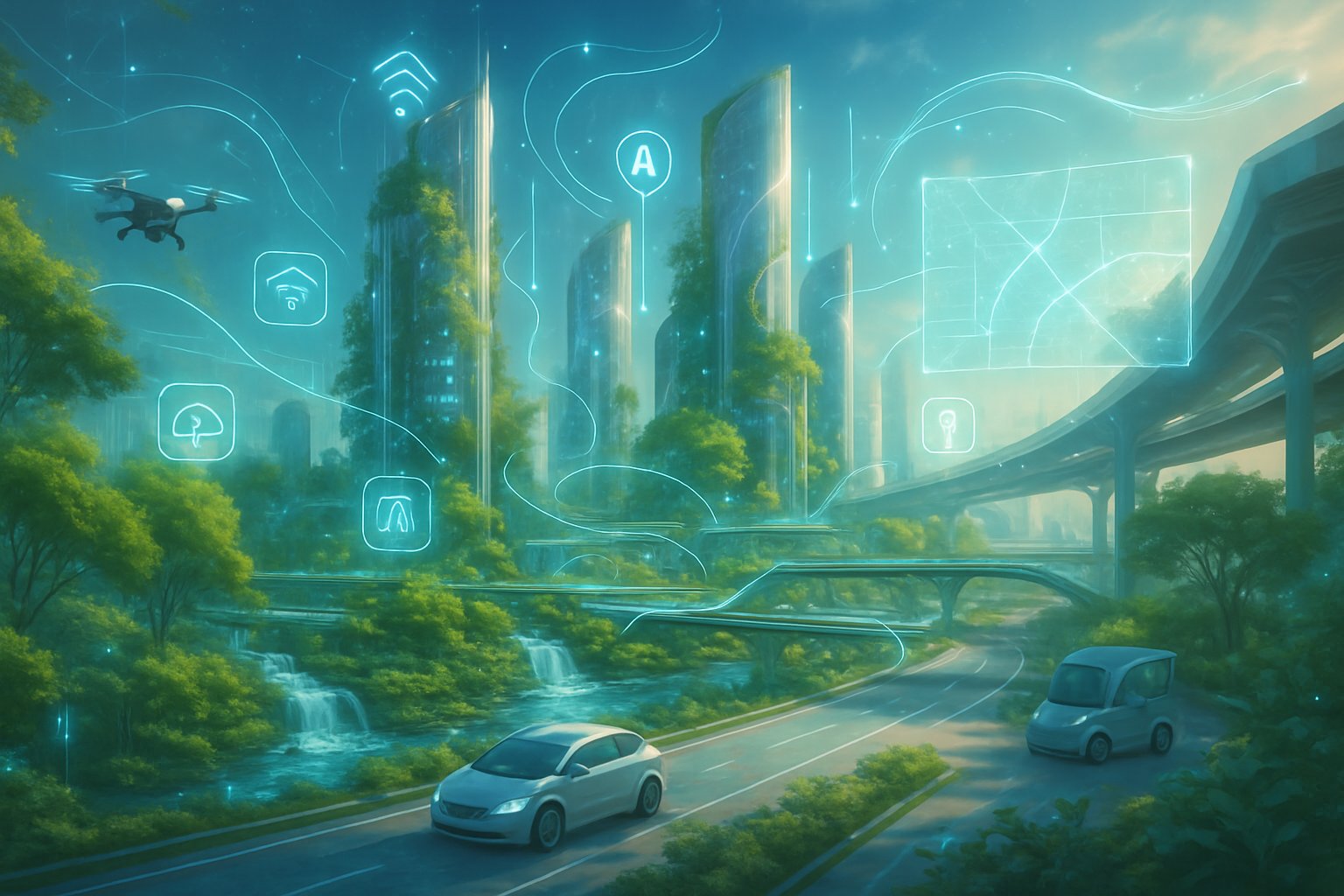
Smart cities use technology and data to improve the way urban areas function, making life better for residents while promoting sustainability and efficiency. They integrate digital tools like IoT sensors, AI, and communication systems to optimize city services such as transportation, energy, and waste management.
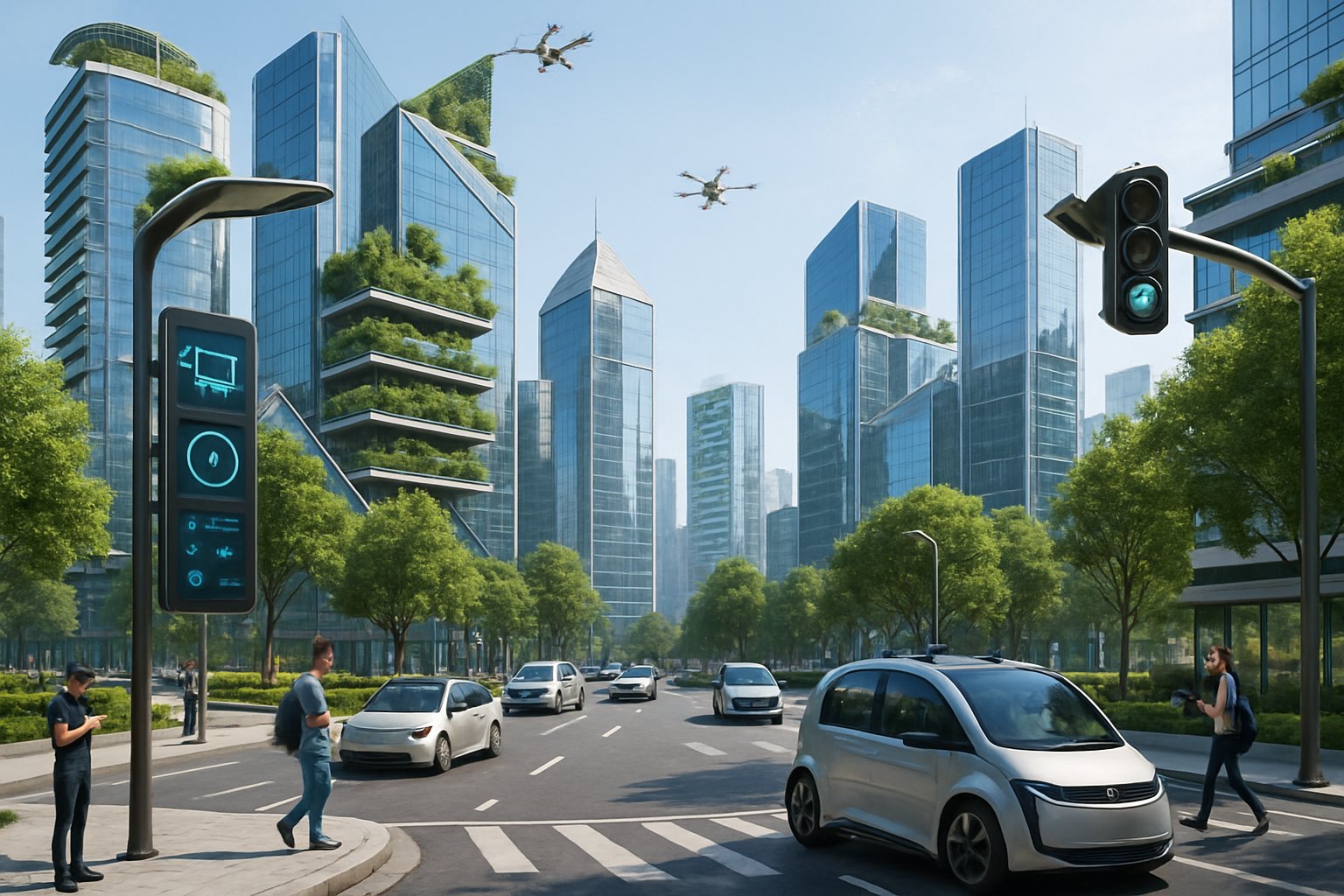
By collecting and analyzing real-time information from people, buildings, and devices, smart cities can respond quickly to challenges and enhance overall quality of life. Our exploration will show how these innovations are shaping the future of urban living and what it means for communities worldwide.
Understanding what makes a city “smart” helps us appreciate the evolving role of technology in addressing urban growth and environmental pressures. We’ll look at key features and real-world examples that demonstrate the impact of these connected systems on daily life. For a deeper dive, see this detailed explanation of smart city technology and its applications.
Definition and Overview
Smart cities use technology and data to improve how urban areas function. This involves enhancing infrastructure, services, and governance to make cities more efficient, sustainable, and responsive to residents’ needs.
The focus is on applying digital tools to optimize traffic, energy use, public safety, and communication. We also consider the balance between innovation and privacy.
Smart city definition
A smart city integrates information and communication technology (ICT) with urban systems to improve operational efficiency and quality of life. It collects data from sources like sensors, cameras, and citizen devices to monitor and manage resources.
This data-driven approach supports real-time decision-making for services such as transportation, energy distribution, and waste management. The goal is to reduce costs, lower environmental impact, and enhance public welfare.
Technologies like AI, IoT, and big data analytics underpin smart city frameworks, enabling automation and connectivity. At its core, a smart city adapts continuously to the evolving needs of its population and environment.
Why we need smart cities
Urban populations are growing rapidly, increasing demand on resources and infrastructure. Traditional city management methods struggle to cope with traffic congestion, pollution, and service inefficiencies.
Smart city solutions address these challenges by making urban systems more resilient and scalable. They help reduce energy consumption, lower emissions, and optimize public transport.
Moreover, they improve citizen engagement by enabling real-time feedback and transparent governance. This promotes social inclusion by tailoring services to diverse communities and increasing accessibility.
In essence, smart cities aim to create healthier, safer, and more sustainable environments for current and future inhabitants.
What is a smart city?
A smart city is more than just technology; it’s a connected environment where digital systems work together seamlessly. This integration spans across sectors: governance, transportation, healthcare, energy, and education.
We see smart cities employing automated traffic controls, smart grids, and mobile apps that let people report issues or receive updates promptly. Smart homes equipped with energy management and voice control contribute to the urban ecosystem.
Becoming a smart city is a gradual process, involving collaboration among public authorities, private companies, and citizens. Protecting privacy while enabling open data access remains a critical balance to achieve.
The smart city model transforms traditional urban living into a more efficient and responsive experience through constant technological innovation.
For more detail visit smart city information from Wikipedia and IBM’s definition.
History and Evolution

Smart cities have developed from early urban data projects into complex systems integrating technology, sustainability, and citizen involvement. We can trace their roots to specific technological initiatives and evolving definitions that reflect changing priorities and capabilities.
History of smart cities
The concept of smart cities dates back to the 1970s with Los Angeles pioneering urban big data projects, such as its Cluster Analysis. Amsterdam is often credited as the first smart city for creating a virtual digital city in 1994.
During the mid-2000s, companies like IBM and Cisco launched initiatives that accelerated smart city development. These efforts aimed to improve infrastructure, efficiency, and data management in urban settings.
After 9/11, surveillance technologies began shaping smart city strategies, which later expanded to incorporate sustainability goals, especially following international agreements like the Paris Accord.
The evolution of smart cities
Smart cities have evolved through several stages. Initially, they were purely technology-driven, focusing on infrastructure and data collection. The next phase involved cities actively integrating technology into urban planning and governance.
More recently, development shifted toward collaborative approaches where citizens play a key role in shaping city services through digital platforms and feedback loops. Resilience planning, renewable energy, and sustainability have become central concerns due to increasing climate-related risks.
Key milestones include the expansion from basic data systems to comprehensive urban ecosystems involving IoT, AI, and sustainable infrastructure. These changes reflect a broader ambition to enhance urban life quality, efficiency, and environmental responsibility.
Early definitions
Early definitions of smart cities tended to highlight technology use and urban data management. Boyd Cohen’s model divides smart city development into three stages: Smart City 1.0 (technology-driven), 2.0 (technology-enabled and city-led), and 3.0 (citizen co-created).
This framework helps clarify how the smart city concept shifted from purely technological solutions to more inclusive and participatory urban development. Other perspectives extend the definition beyond technology, encompassing urban planning and social factors integral to city life.
Understanding these stages informs how cities can balance innovation with residents’ needs, moving from top-down approaches to collaborative, sustainable city management. For a detailed timeline and overview, we can refer to the History of smart cities timeline from Verdict.
Smart City Technologies
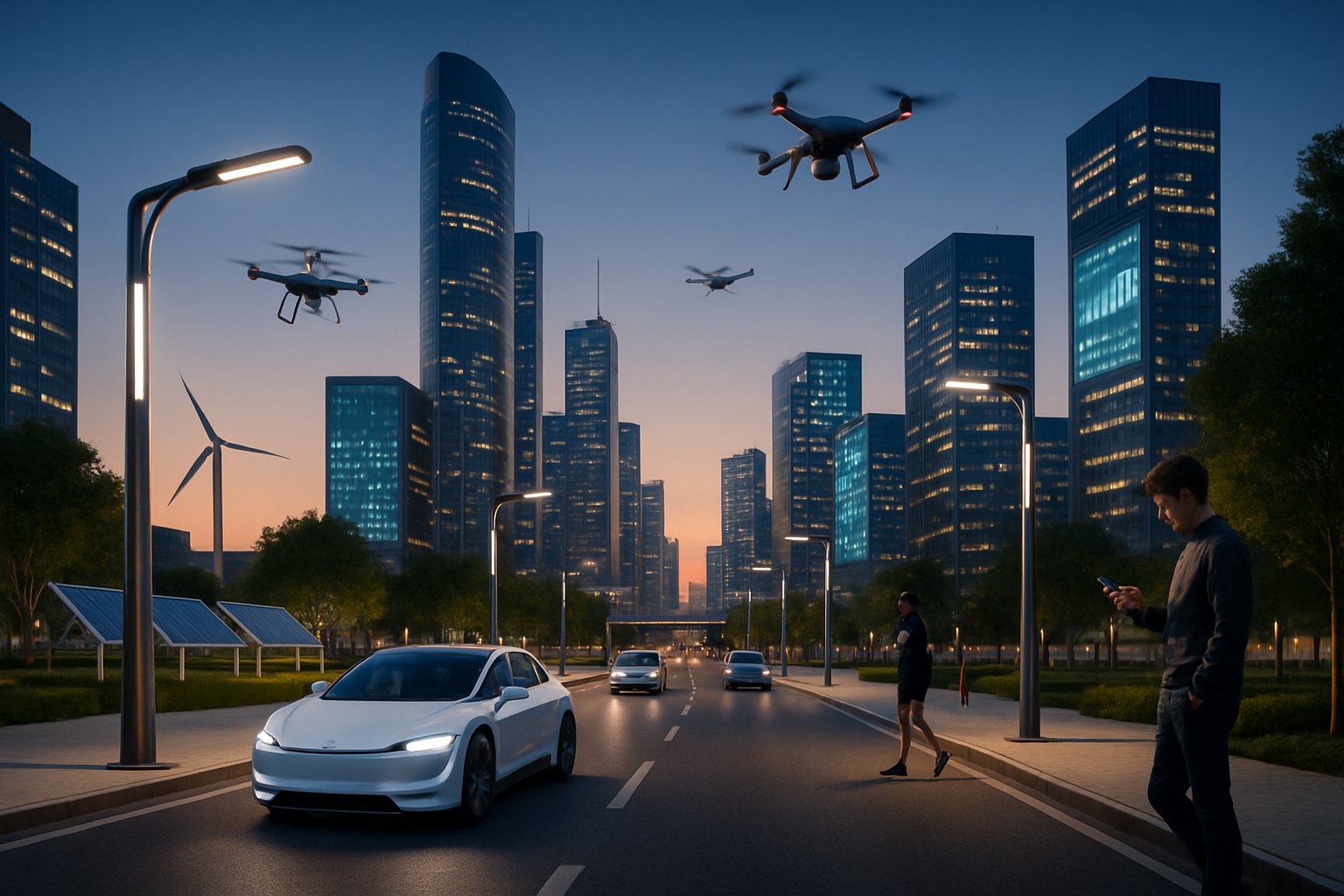
Smart cities rely on a combination of advanced tools and systems to improve urban life. These technologies optimize resources, enhance services, and enable sustainable growth. We focus on how digital systems manage data and automate processes to create more efficient, responsive environments.
Information and communication technology (ICT)
ICT forms the backbone of smart cities by enabling efficient data exchange and connectivity. It integrates telecommunications, computing, and software systems to support real-time communication among city departments, businesses, and citizens.
Through ICT, we can implement digital platforms that handle services like emergency response, public information dissemination, and administrative tasks. This integration reduces downtime and improves coordination across urban functions.
Incorporating ICT allows cities to stay agile in managing challenges like traffic congestion, energy use, and public safety. Its role in connecting devices and people is essential for a responsive urban environment. Learn more about how ICT supports sustainable development at Thales.
Internet of Things (IoT)
The IoT connects numerous urban devices, allowing data collection and remote control across city systems. Sensors, cameras, and smart meters provide real-time insights on areas like traffic flow, waste management, and air quality.
Using IoT networks, we gather data continuously to monitor infrastructure health and resident needs. This real-time awareness helps optimize services and reduce resource waste.
IoT enables automation in key sectors, improving efficiency and responsiveness. Cities like Copenhagen employ IoT to streamline waste collection, showcasing its practical benefits. See examples of IoT in smart cities at Earth.Org.
Automation
Automation reduces manual intervention by using technology to perform routine processes automatically. In smart cities, this applies to traffic light control, public transportation scheduling, and energy distribution.
By automating these systems, we decrease errors, increase service reliability, and free human resources for more complex tasks. Automation also supports adaptive responses to changing conditions, like adjusting lighting based on pedestrian presence.
Cities benefit from reduced operational costs and improved citizen experiences when these tasks are automated. Efficient automation helps meet rising urban demands without proportional increases in staffing.
Artificial intelligence (AI)
AI processes vast amounts of urban data to identify patterns, predict trends, and optimize resource allocation. Machine learning algorithms support smarter decision-making in areas such as traffic management, emergency services, and energy consumption.
We use AI to enable predictive maintenance of infrastructure, reducing downtime and repair expenses. AI-driven analytics support smarter public safety measures, identifying risks before incidents occur.
With AI, cities can tailor services to specific community needs, enhancing inclusivity and responsiveness. Advanced data analysis underpins many smart city improvements, driving efficiency and sustainability. More on AI’s role in urban technology can be found at Gorilla Technology Insights.
Smart transportation
Smart transportation systems integrate real-time data, communication, and automation to improve mobility. Tools like traffic sensors, GPS-based monitoring, and dynamic signaling reduce congestion and commute times.
We use these systems to provide accurate arrival times for public transit, support shared mobility options, and manage autonomous vehicles. This enhances convenience, accessibility, and sustainability.
Smart transportation reduces emissions by optimizing routes and encouraging the use of cleaner transport modes. Cities implementing these solutions offer residents greater travel efficiency and comfort. For smart transit innovations, see IBM’s overview of smart city applications.
Smart energy
Smart energy management focuses on balancing supply and demand while improving efficiency and incorporating renewable sources. Technologies include smart grids, energy storage systems, and demand response mechanisms.
We deploy sensors and meters to track consumption patterns and detect faults for immediate correction. This fosters energy conservation and cost savings.
Smart energy systems also integrate distributed generation like solar panels, feeding clean energy back into the grid. Such solutions contribute to urban sustainability goals and energy resilience. Microsoft Industry highlights smart energy as key for future cities.
Smart infrastructure
Smart infrastructure uses embedded technology to monitor and manage physical assets such as buildings, roads, and utilities. This involves structural health monitoring, intelligent lighting, and water usage tracking.
By gathering real-time data, we can prevent failures and optimize maintenance schedules, extending asset lifespans and enhancing safety.
Smart infrastructure also supports adaptive environments, like automatically adjusting lighting based on weather or occupancy. These upgrades reduce operating costs and improve urban livability. For practical examples, see the UK’s smart city renovation efforts at ESI.
Enabling technologies
Several technologies underpin smart city systems, including cloud computing, edge computing, robust cybersecurity, and scalable digital networks. These provide the foundation for data storage, processing, and secure communication.
Cloud platforms allow flexible data access and integration from multiple sources. Edge computing reduces latency by processing data near its source, enabling faster responses.
Cybersecurity protects sensitive urban data and infrastructure against digital threats. Together, these enabling technologies maintain the reliability and scalability of smart city solutions. More details are available at Gorilla Technology Insights.
Characteristics and Features
Smart cities rely on integrating technology, efficient resource use, and responsive governance. They improve urban life through dynamic systems that monitor, analyze, and optimize various city functions.
Forms of intelligence
Smart cities embody multiple types of intelligence: operational, artificial, and human.
Operational intelligence refers to real-time data analysis for city services like traffic flow and emergency response. This enables proactive decisions and quicker problem-solving.
Artificial intelligence powers systems such as predictive maintenance and automated public services, allowing us to anticipate needs instead of reacting.
Human intelligence manifests in citizen engagement and participatory governance. Tools like mobile apps and open data platforms encourage collaboration, improving policy and city management.
Together, these intelligence forms create a responsive urban environment that adapts to changing conditions efficiently.
Energy usage
Efficient energy consumption is central to a smart city’s sustainability. We implement smart grids that dynamically balance supply and demand, minimizing waste.
Buildings use sensors and automation to optimize lighting, heating, and cooling based on occupancy and weather patterns. These smart buildings reduce operational costs and carbon footprints.
Renewable energy integration, such as solar panels linked to grid systems, supports cleaner power generation.
Energy monitoring platforms provide real-time data to both managers and consumers, promoting informed decisions that reduce unnecessary usage.
By prioritizing intelligent energy use, we enhance environmental sustainability and urban resilience.
Data management
Data is the backbone of smart city operations. We gather information continuously from IoT devices, sensors, and citizen inputs.
Efficient data management involves secure storage, real-time processing, and actionable analytics. This enables optimized services, from mobility to waste handling.
Privacy and security are critical concerns. We balance transparency and open data initiatives with stringent measures to protect personal information.
Advanced data platforms support interoperability between sectors, ensuring seamless information flow and enabling integrated urban planning.
Effective data governance allows us to make evidence-based decisions and enhance public trust.
Human factors
People are at the core of smart cities. Accessibility, safety, and quality of life guide our technology deployments.
We focus on inclusive infrastructure, ensuring digital services and public spaces are usable by all demographics, including elderly and disabled citizens.
Safety is enhanced through smart surveillance, emergency alert systems, and predictive policing mechanisms.
Engagement channels enable residents to participate in decision-making, reporting issues, and contributing ideas.
Education initiatives raise awareness and promote digital literacy, ensuring the population benefits fully from smart innovations.
Human-centric design maintains social cohesion alongside technological advancement.
Smart city features
Several defining features characterize smart cities: intelligent transportation, sustainable infrastructure, and integrated communication networks.
- Intelligent transportation includes real-time transit tracking, adaptive traffic signals, and support for electric and shared vehicles.
- Sustainable infrastructure focuses on green spaces, efficient water management, and resilient construction.
- Communication networks provide ubiquitous high-speed internet access and IoT connectivity for devices across the city.
Smart buildings with energy and occupant monitoring are increasingly common.
These features collectively create a more efficient, livable, and environmentally friendly urban environment that meets the evolving needs of its population.
For more detailed examples, see the main characteristics of smart cities.
Methods and How Smart Cities Work
Smart cities rely on a blend of technology, data collection, and strategic management to improve urban living. We focus on advanced tools and well-structured systems that optimize resources, support sustainability, and boost efficiency in city operations.
How smart cities work
Smart cities operate by integrating a wide network of sensors and devices, often referred to as the Internet of Things (IoT). These devices continuously collect real-time data on traffic, energy use, air quality, and public safety.
This data is analyzed using artificial intelligence and cloud computing to make informed decisions. For example, traffic signals adjust dynamically to reduce congestion, and street lights dim or brighten based on pedestrian movement. This real-time responsiveness improves urban services without constant human intervention.
Smart city technology
The core technologies include IoT sensors, big data analytics, AI algorithms, and cloud platforms. IoT sensors gather data from infrastructure, vehicles, and citizens in real-time. AI processes this data to detect patterns or anomalies.
Cloud computing provides scalable storage and processing power needed for massive datasets. Together, these technologies enable automation of tasks like waste management, energy distribution, and public transport scheduling.
Blockchain and 5G networks enhance data security and communication speeds, ensuring reliable, fast urban services.
Fostering sustainability with smart cities
Smart cities use technology to reduce carbon footprints and resource waste. Optimized energy grids balance supply and demand, incorporating renewable sources like solar and wind.
Water management systems detect leaks early to prevent expensive losses. Intelligent waste management routes collection trucks efficiently, lowering emissions.
Urban planning benefits too, with data helping design green spaces and encourage eco-friendly transport, like bike-sharing and electric vehicles.
How data and digital can propel cities
Data drives decision-making in smart cities, offering insights into citizen behavior and infrastructure performance. Digital platforms facilitate citizen engagement and transparent governance.
Open data initiatives allow developers to create applications improving access to public services. Data analytics identify high-demand areas for healthcare, education, and emergency response.
Predictive modeling helps prevent issues before they arise, such as forecasting air pollution levels or energy shortages.
Operational efficiency
Smart cities increase efficiency by automating routine processes and optimizing resource allocation. Intelligent traffic management reduces delays and fuel consumption.
Sensor-driven maintenance schedules for infrastructure avoid costly breakdowns. Smart lighting adjusts to actual need, cutting energy bills.
By coordinating multiple systems—transport, utilities, communication—we create a smarter, more responsive urban environment that serves citizens better and uses resources wisely.
For more information about how smart cities leverage these technologies, see smart city operations and technology fundamentals.
Examples and Initiatives
Smart city development draws on diverse technologies and strategies to improve urban life. We see projects focused on infrastructure, sustainability, data integration, and partnerships that involve governments, businesses, and communities. There are also challenges, especially around privacy, digital divides, and resource allocation, that require careful attention.
Smart city projects around the world
Smart cities use technology to optimize resources, enhance services, and reduce environmental impact. Cities like Amsterdam promote cycling infrastructure with bike lanes and rental services, while Copenhagen targets carbon neutrality through wind energy and sustainable urban planning.
Elsewhere, cities leverage IoT for traffic management, pollution monitoring, and public safety. Data-driven public transport schedules reduce wait times and emissions. Projects often focus on improving quality of life by combining ICT with environmental goals and citizen engagement.
Many initiatives prioritize environmental sustainability alongside smart infrastructure, aiming not just for efficiency but also for resilience and reduced carbon footprints. Exploring global case studies helps show what works in different cultural and economic contexts.
Top 12 smart cities in the U.S. examples
In the U.S., cities like San Francisco, Seattle, and Boston lead with smart infrastructure, energy efficiency, and data integration. San Francisco uses sensor networks to monitor traffic and air quality. Seattle focuses heavily on green energy and sustainable building initiatives.
Boston invests in smart transportation systems while integrating AI for urban service delivery. Other cities such as Austin and Denver emphasize digital government services and citizen engagement platforms.
The diversity of projects shows a spectrum from green energy deployment to advanced digital governance. These cities inspire others with publicly accessible data dashboards and AI-driven innovation in urban management.
See details on smart cities in the U.S.
Examples of smart cities
Globally, cities like Singapore, Barcelona, and Tokyo have established themselves as smart city leaders. Singapore’s extensive use of sensors and data analytics optimizes everything from utilities to health services.
Barcelona has integrated smart lighting, waste management, and citizen participation platforms to improve both urban living and municipal efficiency.
Tokyo leverages IoT and robotics in infrastructure maintenance and disaster management. The examples highlight how tailored technological approaches fit unique city needs, emphasizing sustainability, connectivity, and participatory governance.
Partnerships
Successful smart city projects often rely on cross-sector partnerships. Governments collaborate with tech companies, universities, and nonprofits to develop solutions.
Public-private partnerships enable funding for large-scale infrastructure upgrades and innovation hubs. For instance, collaboration can produce smart grids, digital platforms, and AI tools that individual entities could not deploy alone.
Community involvement is also essential to ensure solutions meet residents’ needs. Partnerships foster knowledge sharing, scalability, and adaptability in smart city initiatives.
Smart city challenges
Despite benefits, many smart city projects face issues with data privacy, cybersecurity, and equitable access to technology.
Interoperability between legacy systems and new technologies can slow progress. Budget constraints and varying political priorities also affect project sustainability.
Residents may resist surveillance or data collection without transparent policies. Smart city planners must navigate these concerns while maintaining innovation momentum.
Smart city challenges and concerns
We also consider social equity and environmental justice as key challenges. Technology deployment risks widening the digital divide if access is uneven.
Environmental sustainability can be complicated by increased electronic waste or energy consumption from new devices. Balancing smart technology growth with ecological impact remains crucial.
There is a continuing need for robust governance frameworks that protect citizens’ rights and promote inclusive growth in smart urban environments. Addressing these concerns is necessary for the long-term success of smart cities.
Criticism and Challenges
Smart cities promise efficiency and innovation, but they also raise complex issues that affect privacy, sustainability, security, and operational stability. We must carefully weigh these factors to understand their true impact.
Criticism
Smart cities face criticism primarily related to privacy violations, social inequality, and surveillance concerns. The extensive data collection required can lead to invasive monitoring, sometimes without full citizen consent. This raises ethical questions about who controls the data and how it is used.
Another issue is that smart city benefits often favor wealthier or tech-savvy populations, potentially widening social divides. There are also concerns about corporate influence and loss of public control as private companies often operate critical smart city infrastructure. These critiques require us to assess who truly benefits and what risks citizens face.
Are smart cities sustainable?
Sustainability in smart cities depends on integrating environmental goals with smart technologies. While smart grids and efficient waste systems reduce resource use, the energy consumption of massive data centers can offset benefits.
Infrastructure upgrades can be costly and resource-intensive, raising questions about long-term sustainability. Equally important is digital inclusion—ensuring all residents can access and benefit from technology. If poorly managed, smart cities risk excluding vulnerable populations or locking in unsustainable resource demands. Addressing these issues requires deliberate design focused on ecological and social sustainability.
Are they secure?
Security is a critical challenge for smart cities given their reliance on interconnected systems. Cyberattacks can disrupt vital services such as transportation, healthcare, and energy management, putting millions at risk.
We face vulnerabilities not only from hackers but also from weak security protocols and interoperability gaps between old and new technologies. Protecting sensitive citizen data is essential to maintain trust. Smart cities must adopt robust cybersecurity frameworks and continuously update defenses against evolving threats to safeguard infrastructure and personal information.
Smart city challenges
Smart cities confront numerous operational obstacles including infrastructure modernization, data privacy, technological integration, and financial constraints. These challenges complicate project implementation and maintenance.
Managing vast amounts of data requires advanced analytics and transparent governance. Balancing innovation with regulation is critical to avoid misuse. Additionally, coordinating multiple stakeholders—government agencies, private firms, and residents—demands clear communication and shared objectives. Without comprehensive planning and collaboration, smart cities risk underperformance and public dissatisfaction.
Assessing and mitigating risk in smart city developments
Risk assessment in smart city projects must cover technical, social, and ethical dimensions. We need frameworks to evaluate potential failures in infrastructure, data breaches, and exclusion risks.
Mitigation strategies include stakeholder engagement, transparent data policies, and flexible design allowing for future upgrades. Ongoing monitoring and risk audits provide early warnings of emerging threats. Implementing standards and regulations can help align developments with public interests and ethical principles, ensuring that risks are minimized while benefits are optimized.
For more insights on these challenges, see detailed analyses on smart city problems.
Future Trends and Developments
Urban environments are evolving rapidly through new technologies and strategies. Our focus sharpens on improving citizens’ health, modeling cities digitally, leveraging advanced AI, responding to climate challenges, and enhancing urban resilience.
Integrating health, well-being and productivity
Cities are embedding health-focused technologies into daily urban life. Smart health communities use IoT devices to monitor environmental quality, reducing pollution exposure and promoting cleaner air.
Workplaces and public spaces increasingly integrate sensors that track occupancy and air quality, optimizing conditions for productivity and well-being. Telehealth infrastructure supports remote care, reducing strain on hospitals.
Behavioral data enables personalized public health campaigns to target issues like obesity or mental health. These efforts collectively aim to create environments where residents are physically healthier and more productive.
Digital twins and the urban metaverse
Digital twins create real-time, dynamic models of physical urban spaces. This allows cities to simulate traffic flows, infrastructure stress, and emergency responses before implementation.
The urban metaverse extends digital twins with augmented reality, offering immersive city planning and citizen engagement. For example, planners can visualize proposed changes in 3D before construction.
These tools improve decision-making accuracy, reduce costs, and foster transparency. The combination of digital twins and the metaverse signals a shift toward interactive and responsive urban management systems.
Edge AI transforming city operations
Edge AI processes data locally on devices rather than sending it to centralized servers. This reduces latency and enhances privacy protection.
By embedding AI at edge devices like traffic lights and surveillance cameras, cities can respond instantly to congestion, accidents, or security threats.
Edge AI enables real-time optimization of resource use such as energy and water. Its decentralized nature supports scalable and resilient operational frameworks critical to smart city success.
Climate action and sustainability initiatives
Sustainability is a central focus, with cities adopting renewable energy integration, smart grids, and energy-efficient building systems.
Waste management technologies automate sorting and recycling, helping reduce landfill use. IoT sensors monitor water and air quality to detect and address pollution rapidly.
Urban green planning includes expanding green spaces and implementing climate-adaptive infrastructure to reduce heat islands and manage stormwater better.
| Initiative | Impact | Example |
|---|---|---|
| Renewable energy adoption | Reduces carbon footprint | Solar microgrids |
| Smart waste management | Improves recycling rates | Automated sorting |
| Green infrastructure | Mitigates flooding and heat islands | Urban tree canopy |
Urban resilience and disaster preparedness
Smart cities employ sensor networks and AI to detect early signs of floods, earthquakes, or fires, enabling faster emergency responses.
Infrastructure is designed to be adaptive, with modular components that can be repaired or replaced quickly after damage.
Community alert systems improve public communication during crises, while data-driven evacuation planning optimizes safety.
This proactive approach minimizes casualties and economic losses from urban disasters, emphasizing the importance of preparedness in city management.